

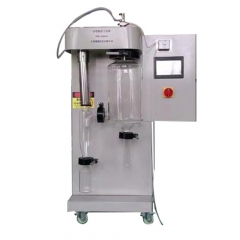
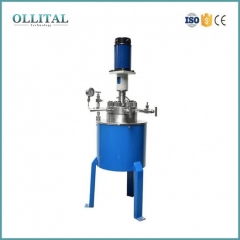
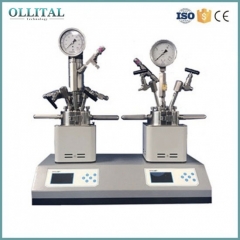
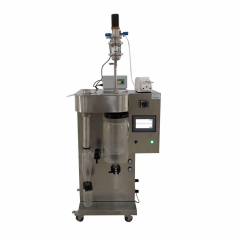
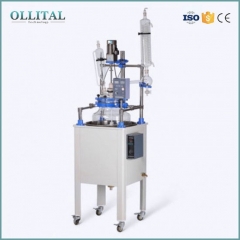
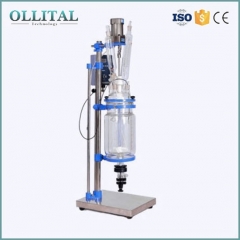
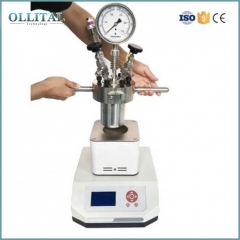
Equipo de secado de alta calidad para laboratorio de escala de 1.5 l.
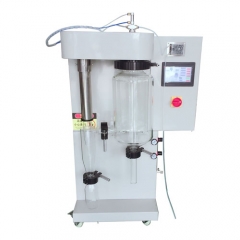
El secador por pulverización a escala de laboratorio es adecuado para la producción en universidades, institutos de investigación y empresas químicas farmacéuticas y de alimentos. & nbsp;
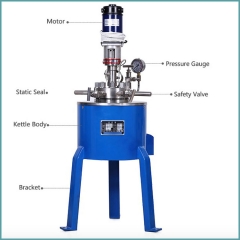
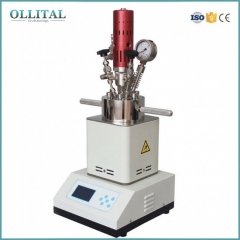
In pharmaceutical, biopharmaceutical, food, and laboratory applications, freeze drying is used when low-temperature dehydration and preservation of product structure are critical. Unlike conventional thermal drying, freeze drying removes water by sublimation under controlled low-temperature and vacuum conditions. This drying method is known as vacuum freeze drying, and the corresponding equipment is the freeze dryer.
Freeze drying relies on the phase behavior of water under controlled temperature and pressure conditions. Water exists in three states—solid, liquid, and gas—which can transform into one another and coexist. When the temperature drops to 0.01 ℃ and the water vapor pressure falls to 610.5Pa (the triple point), water, ice, and water vapor can coexist in equilibrium. Under vacuum, the frozen water in the product sublimates directly from ice to vapor, allowing moisture to be removed without passing through the liquid phase.
The freeze drying process consists of three main stages:
• During pre-freezing, the formulation is cooled to a condition where the product is sufficiently frozen for the subsequent primary drying step. The eutectic point is the highest temperature at which a solution is completely frozen solid. The freezing conditions should be established according to the formulation's critical product temperature and ice crystal formation characteristics. Freezing rate affects ice crystal size and distribution, which in turn influence pore structure, resistance to vapor flow, and subsequent primary drying performance. The coarse crystals formed during slow freezing leave larger voids after sublimation, facilitating moisture escape and improving freeze drying efficiency. For heat-sensitive materials, the pre-freezing stage already protects them from thermal degradation under the controlled environment of the freeze dryer.
• During primary drying, controlled heat is supplied to the product under vacuum to drive ice sublimation. The shelf temperature and chamber pressure must be balanced to maintain the product temperature below its critical limit. This stage requires close control of shelf temperature, chamber pressure, and product temperature to prevent product collapse or loss of structure. Primary drying is the most time-consuming stage of the entire freeze drying cycle and directly determines batch processing efficiency.
• Secondary drying removes residual bound moisture through desorption, with the shelf temperature increased under continued vacuum. The final moisture content depends on the formulation and target product specification. The freeze-dried product exhibits a porous, sponge-like structure with virtually no change in volume, and can be rapidly reconstituted to its original state upon addition of water. Materials processed by the freeze dryer can be stored for extended periods at room temperature—this is the core advantage that distinguishes freeze drying from other drying methods.
• Freeze drying technology is widely adopted in the pharmaceutical, biological product, and food industries due to several core advantages it offers over other drying methods. Whether it is a small freeze dryer used in laboratory R&D or large-scale industrial equipment, the core value of freeze drying is built upon the following characteristics.
• The freeze drying process is carried out at low temperatures, with the material temperature kept within a controlled range throughout the entire drying cycle, avoiding the degradation of active ingredients caused by high temperatures. For heat-sensitive materials such as proteins, peptides, vaccines, and microbial preparations, freeze drying helps minimize thermal degradation and maintain the desired physicochemical and biological properties. The dried material exhibits a porous, sponge-like structure and readily dissolves in water, returning to its pre-freeze-dried state—an effect that hot-air drying and spray drying cannot achieve.
• During freeze drying, the voids left by sublimated ice crystals preserve the material's original structure with virtually no change in volume. Additionally, the extremely low moisture content of freeze-dried products allows for long-term storage and transport at room temperature without the need for cold-chain support. For biological products and foods requiring long-term preservation, this characteristic directly reduces storage and transport costs.
• In freeze drying, moisture sublimates directly from ice crystals without passing through a liquid phase, thereby avoiding concentration effects during dehydration. This prevents side effects such as foaming and oxidation caused by increased solution concentration during drying. This characteristic makes freeze drying irreplaceable in the preservation of highly active biological products such as serum, bacterial strains, vaccines, and enzyme preparations.
• Freeze dryer selection should be based on the formulation, required drying cycle, solvent load, and target product characteristics rather than equipment size or price alone.
• The condenser is responsible for capturing water vapor released from the product during drying and reducing the vapor load reaching the vacuum pump. Its primary function is to re-freeze sublimated water vapor while simultaneously protecting the vacuum pump. Condenser temperature is a key parameter when selecting a freeze dryer, particularly for formulations with a high vapor load or organic solvents.
• Laboratory freeze dryers generally offer cold trap temperatures in two ranges: approximately -50°C and approximately -80°C. The lower the cold trap temperature, the greater the moisture capture capacity—however, this also demands higher refrigeration performance, which increases both equipment cost and operating expenses. Experimental data indicates that reducing cold trap temperature from -35°C to -55°C significantly improves capture efficiency, while further reduction below -55°C yields diminishing returns.
• A condenser temperature around -50°C is commonly used for aqueous formulations, while lower temperatures may be required depending on the formulation and solvent system. For formulations containing organic solvents, a lower condenser temperature may be required to improve vapor capture and protect the vacuum system.
• For example, the Ollital HFD series offers different condenser temperature configurations for different applications. The HFD-6 provides a condenser temperature of -40°C, while the HFD-A series can reach -70°C, giving users flexibility when working with different formulations.
• Ice capacity refers to the total amount of moisture the cold trap can capture. Condenser ice capacity should be matched to the expected water load of the batch, with sufficient capacity to maintain stable vapor capture throughout the drying cycle. Additionally, only the areas within the cold trap that reach the rated temperature contribute to effective volume, so the total cold trap volume is typically slightly larger than its maximum ice capacity.
• When evaluating vacuum performance, users should consider not only the ultimate vacuum but also chamber pressure stability and controllability during the drying cycle. During primary drying, chamber pressure should be selected according to the formulation and drying conditions to maintain an appropriate balance between heat transfer and vapor removal.
• Freeze dryers generally operate on 220V/50Hz power supplies, with power consumption varying significantly across different models. Small laboratory-scale units typically consume around 750W, while larger-capacity models may range from 2300W to 3300W. Buyers should verify on-site power supply conditions in advance to ensure compatibility with the equipment's power requirements.
• Freeze dryers are primarily classified into two structural types: bell-type and in-situ (or shelf-type). The core difference between them lies in whether pre-freezing and drying are completed in the same position.
• The bell-type freeze dryer is characterized by a transparent bell-shaped or cylindrical glass cover, with the drying chamber and cold trap arranged as separate upper and lower units. Materials must be pre-frozen in the cold trap or an external freezer first, and then manually transferred to the drying chamber for vacuum application and sublimation drying. Because pre-freezing and drying are performed separately, material transfer is required between the freezing and drying steps, which may introduce additional handling and temperature-control considerations. Bell-type units have a simple structure and relatively low manufacturing cost. The transparent cover allows direct observation of the freeze-drying process, making them suitable for teaching experiments, basic research, and small-batch sample processing.
• The in-situ freeze dryer adopts an integrated design where the shelves inside the drying chamber are themselves refrigerated. Once materials are loaded, the entire sequence—pre-freezing, sublimation drying, and desorption drying—can be completed within the same chamber without manual transfer. Pre-freezing, primary drying, and secondary drying can be performed in the same chamber, with shelf temperature and chamber pressure controlled according to the programmed drying cycle. This configuration improves process repeatability and reduces manual material transfer. This configuration is particularly suitable for biopharmaceutical development requiring stringent sterility, such as vaccines, antibodies, and cell-based products.
• Standard Type: Basic configuration, suitable for routine sample processing in trays.
• Stoppering Type: Equipped with a stoppering mechanism, suitable for samples in vials that require immediate sealing after freeze drying to prevent secondary contamination.
• Manifold Type: Allows external connection of multiple drying flasks, suitable for parallel processing of multiple samples.
• In addition, for food processing and household preservation applications, home-use freeze dryers are gaining attention. Whether it is freeze drying food (such as fruits, vegetables, pet food) or long-term preservation of household ingredients, freeze drying technology offers a solution that preserves nutrition and flavor without the need for additives.
• Modern laboratory freeze dryers typically provide programmable control of shelf temperature, chamber pressure, and drying time, allowing users to establish and repeat defined freeze-drying cycles.
• Program mode is suitable for established processes with well-defined freeze-drying curves. The system automatically runs according to preset temperature, vacuum, and time parameters without manual intervention, making it ideal for batch production or stable processes. Vacuum mode is more suitable for process development stages, where users can manually adjust heating parameters based on real-time vacuum readings, offering greater flexibility.
• Depending on the configuration, the control system can provide recipe management, process-curve recording, historical data storage, and data export for process development and batch traceability. The entire freeze-drying process is automated, reducing operational complexity and human error while improving batch-to-batch repeatability.
• One-touch defrosting is an essential feature of freeze dryers. During operation, water vapor sublimated from the material condenses into frost on the cold trap, affecting subsequent drying efficiency. Traditional natural defrosting requires shutting down the compressor and allowing the cold trap temperature to rise gradually—a process that can take hours. One-touch defrosting uses hot gas or electrical heating to actively melt the frost; operators simply press a button to complete defrosting quickly, significantly reducing waiting time and improving equipment utilization.
• In practice, freeze dryer selection is closely tied to the formulation, critical product temperature, required drying area, vapor load, and target drying cycle. By allowing ice crystals to sublime directly under low-temperature vacuum conditions, it preserves the physicochemical and biological integrity of the dried material to the greatest extent possible. Whether it is a small freeze dryer used in laboratory R&D or a home-use freeze dryer, the core principle remains the same—utilizing sublimation to achieve low-temperature dehydration while preserving activity, structure, and nutrition.
• Understanding the principles of sublimation and key selection parameters is essential for choosing the right equipment and using it effectively. In practice, different materials have varying requirements for cold trap temperature, freeze-drying area, vacuum level, and other parameters. Before selecting a freeze dryer, users should define the formulation characteristics, expected batch load, required condenser temperature, drying area, vacuum performance, and process-control requirements. Matching these parameters to the equipment configuration is essential for reliable and repeatable freeze-drying results.
• For applications involving freeze drying food, this technology offers a solution for long-term food preservation without additives, significantly extending shelf life while retaining flavor and nutritional value. Whether industrial-scale systems or food freeze dryers, each plays an irreplaceable role within its respective scope of application.



 Servicio en línea
 +86 15960821529
 kevin@ollital.comkevinollital@gmail.com
 +86 15960821529
 +8615960821529


