
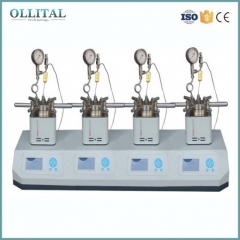
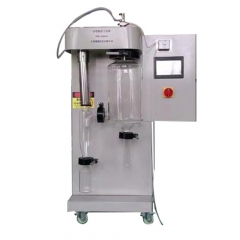
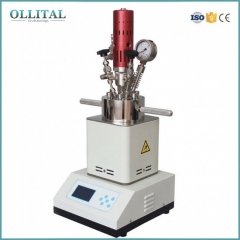
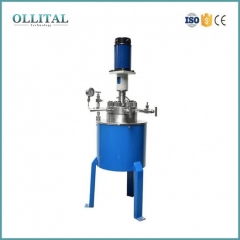
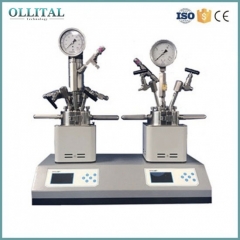
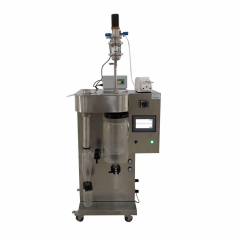
Equipo de secado de alta calidad para laboratorio de escala de 1.5 l.
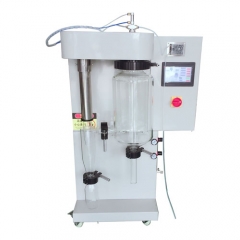
El secador por pulverización a escala de laboratorio es adecuado para la producción en universidades, institutos de investigación y empresas químicas farmacéuticas y de alimentos. & nbsp;
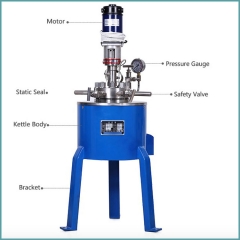
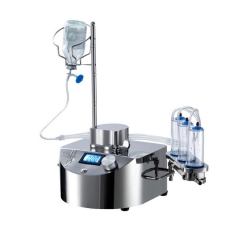
Solvent recovery machines are widely used in industries where solvents are consumed in significant volumes—painting, printing, electronics, automotive parts manufacturing, and chemical processing. The economic and environmental benefits are clear: recovered solvent can be reused, reducing both raw material purchases and hazardous waste disposal costs.
But there is one factor that is sometimes underestimated during equipment selection—not the price, but the safety. The solvents being processed—acetone, alcohol, toluene, ethyl acetate, and various thinners—are classified as flammable liquids. The distillation process itself requires heating these solvents to and beyond their boiling points, generating flammable vapors. These vapors, when mixed with air in the right proportion, create a potentially explosive atmosphere.
This is reflected in industrial safety regulations, equipment design standards, and site operating procedures. It is a matter of industrial safety regulations, equipment design standards, and operating procedures. Understanding why solvent recovery machines must be explosion-proof is the first step in selecting equipment that is both effective and compliant.
Solvent recovery machines process flammable liquids—alcohol, acetone, toluene, ethyl acetate, and various thinners. The distillation process involves heating these solvents to and above their boiling points, which means flammable vapors coexist with electrical components and heat sources. This creates a potentially explosive environment by definition: flammable vapor, oxidizer (air), and ignition sources are all present in the same space.
The National Electric Code (NEC) in the United States defines a 12-meter radius around solvent recovery equipment as a Classified Hazardous Area. In these zones, only explosion-proof certified equipment may be legally installed and operated. This is not a manufacturer's recommendation—it is a regulatory requirement based on the fundamental physics of flammable vapor behavior.
When a liquid solvent is heated to its boiling point, its vapor pressure equals atmospheric pressure, and vapor generation becomes continuous. At these temperatures, if the vapor concentration falls within its flammable range and encounters an ignition source, combustion or explosion can occur. This is not a theoretical concern—it is the operational reality of solvent distillation, recognized across chemical engineering and industrial safety standards.
Since the risk of flammable vapor release is inherent to the distillation process, the equipment's electrical and mechanical systems must be designed to eliminate the equipment itself as a potential ignition source.
Several components in a solvent recovery machine present ignition risks:
Heaters: The heating system reaches temperatures well above the solvent's auto-ignition temperature. If a fault allows exposed heating elements to contact solvent vapors or liquid, ignition is possible.
Motors: Electric motors generate heat and may produce sparks during normal operation or fault conditions. Standard motors operating in a solvent vapor environment are a recognized ignition source.
Temperature sensors and thermocouples: While they operate at low voltage, faults or damaged wiring can create arcs or sparks sufficient to ignite flammable vapors.
Electrical enclosures and control panels: These contain numerous electrical connections, relays, and terminals. Without proper sealing and protection, any spark inside the enclosure could propagate to the surrounding atmosphere.
Switches and connections: Routine switching operations can generate arcs, making even simple on/off controls a potential ignition source in a hazardous area.
The solution is not to avoid these components—they are essential to machine operation—but to design them so they cannot ignite the surrounding atmosphere. This is achieved through flameproof enclosures, intrinsically safe circuits, and explosion-proof component ratings that contain any internal ignition and prevent propagation to the external environment.
The core logic of explosion-proof design can be summarized as: acknowledge that the risk exists, but ensure through design that the equipment itself does not become the link that ignites that risk.
The explosion-proof design of a solvent recovery machine is not a single measure, but a systematic approach to eliminating ignition risks across four levels: electrical, mechanical, control, and structural.
All electrical components in the equipment—control panels, heating elements, sensors, and motors—are enclosed in flameproof housings. Flameproof enclosures are designed so that even if an internal explosion occurs, the housing itself can withstand the explosion pressure and prevent flame from propagating to the external environment. Cable entries are fully sealed to prevent flammable vapors from penetrating electrical connection points.
The control system circuitry is designed according to intrinsically safe principles, meaning that the energy (sparks or thermal effects) generated under normal or fault conditions is insufficient to ignite flammable vapors. Temperature instruments use contactless electrical designs, removing electrical ignition sources at the circuit level.
Motors and heaters are the components with the highest energy concentration in the equipment. Explosion-proof motors use flameproof housings and special wiring designs to prevent internal sparks from escaping. Heaters use thyristor (SCR) continuous heating control, avoiding the arcing risk associated with relay on/off cycling, while precise temperature control prevents localized overheating.
The distillation vessel uses high-grade sealing structures to prevent vapor leakage. Pressure monitoring and relief devices are also incorporated—when internal pressure exceeds the set value, the system automatically stops heating and triggers an alarm; if pressure continues to rise, a mechanical safety valve automatically opens to relieve pressure, preventing structural failure caused by overpressure.
These four levels together constitute the explosion-proof safety system of a solvent recovery machine—each is essential, and none can be omitted.
When a solvent recovery machine carries ATEX and CE certification, it tells buyers that the equipment meets defined safety and compliance standards. These are not marketing claims—they are documented evidence that the equipment has been assessed against regulatory requirements for use in hazardous environments.
ATEX is the mandatory European regulatory framework for equipment intended for use in potentially explosive atmospheres, governed by Directive 2014/34/EU . ATEX certification confirms that the equipment has been assessed by a Notified Body (an independent certification organization recognized by the EU) and that its design and construction comply with the applicable harmonized standards, including the EN 60079 series. For solvent recovery equipment, this certification is not optional for the European market—it is a legal requirement.
The certification process examines multiple aspects of the equipment: the design of electrical and mechanical components, the effectiveness of flameproof enclosures, the integrity of sealing systems, and the ability to prevent ignition of surrounding flammable vapors . The ATEX Certificate of Conformity confirms that the equipment meets the Essential Health and Safety Requirements specified in the Directive.
CE marking indicates that the product meets all applicable EU safety, health, and environmental protection requirements. For solvent recovery equipment, this includes compliance with the ATEX Directive as well as other applicable directives such as the Low Voltage Directive and Machinery Directive.
When a distillation-based solvent recovery machine has ATEX and CE certification, it provides documented evidence that the equipment has been evaluated against internationally recognized safety standards. This gives buyers a basis for verifying that the equipment is suitable for installation in hazardous areas where flammable vapors may be present. The certification documents should be reviewed to confirm the specific protection marking and applicable standards.
ATEX and CE certification is a starting point for verifying equipment safety—not the final step. The actual certification marking on the equipment, with its specific classification (gas group, temperature class, and zone rating), is what determines whether the equipment is suitable for the intended installation environment.
A product description that simply says 'explosion-proof' is not enough. Buyers should request certification documents from the manufacturer or supplier, including the relevant explosion-proof certificates and the manufacturer's Declaration of Conformity, and verify that the certificates are valid and that the certificate numbers match the equipment nameplate.
Buyers should also confirm that the certification obtained covers the regulatory requirements of the target market. The explosion-proof marking on the equipment indicates the certified conditions of use—the gas group, temperature class, and zone rating should be checked against the actual site conditions. Do not assume that all components are covered just because the system has a certificate—the certification status of key components such as the motor, heater, thermocouple, and electrical enclosure should also be verified.
Not all certified equipment is suitable for all solvents or all locations. The gas group and temperature class markings define the limits of safe operation, and buyers should confirm that the certification scope covers the actual solvent types and operating conditions present at the site. Do not judge an explosion-proof solvent recovery machine simply by the words "explosion-proof." Check the certification, protection marking, applicable standards, and actual equipment configuration.
Explosion-proof design is not a nice-to-have for solvent recovery equipment used with flammable solvents—it is a fundamental requirement for both equipment safety and regulatory compliance. Understanding why explosion-proof design matters is the first step toward making the right selection.
During the selection process, buyers should verify the equipment's certification documents, protection marking, applicable standards, and actual configuration—rather than relying solely on the word "explosion-proof" in the product description. ATEX and CE certification provide documented evidence that the equipment meets the relevant safety requirements. However, the specific classification markings on the equipment—gas group, temperature class, and zone rating—are what ultimately determine whether it is suitable for the intended installation environment.
In essence, the nature of solvent recovery makes the generation of flammable vapors unavoidable. The value of explosion-proof design lies in eliminating the equipment itself as a potential ignition source through flameproof enclosures, intrinsically safe circuits, multi-level protection, and sealing systems. For buyers, understanding this logic is essential to making genuinely safe decisions during equipment selection.



 Servicio en línea
 +86 15960821529
 kevin@ollital.comkevinollital@gmail.com
 +86 15960821529
 +8615960821529


