

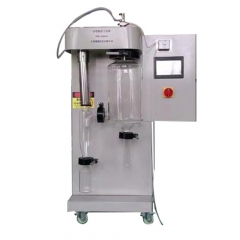
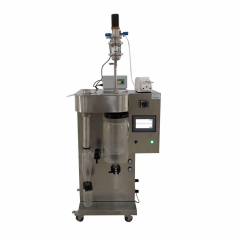
High quality 1.5L scale lab spray dryer equipment
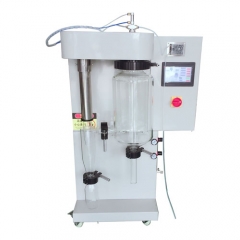
Lab scale spray dryer is suitable for the production of in universities, research institutes and food and pharmaceutical chemical enterprises.
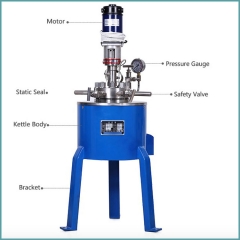
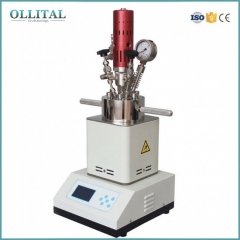
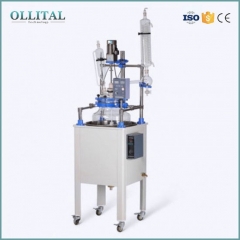
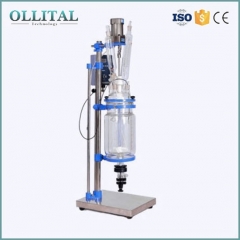
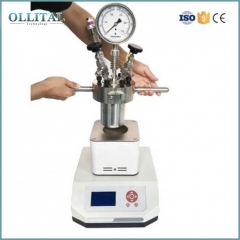
In laboratory equipment, a repeat order can sometimes say more than a first inquiry.
In 2020, a customer from Israel purchased a 2L laboratory spray dryer from OLLITAL for research and development work. After several years of use, the customer recently contacted us again—not because the original equipment needed replacing, but because their research requirements had developed.This time, they were looking for a more specialized solution: a three-fluid spray dryer designed for materials that need to react with each other while being processed and dried.This time, instead of discussing the parameters solely by email, they brought their new material to the OLLITAL factory for actual testing.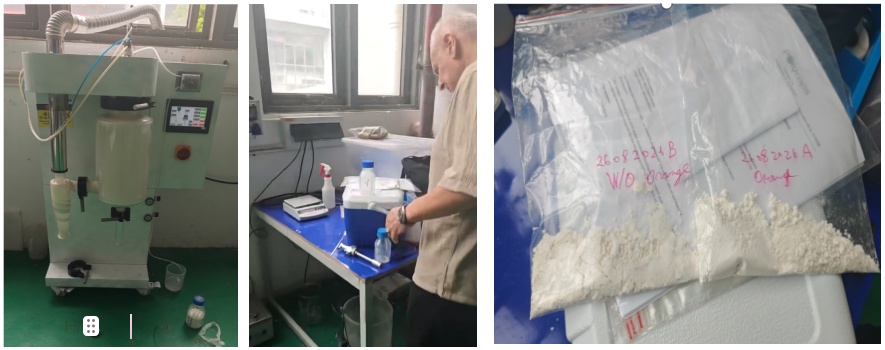
For many laboratories, purchasing a laboratory spray dryer is only the beginning of a longer research journey.As formulations change, new materials are introduced, and research projects become more complex, the original equipment may no longer cover every experimental requirement.
That was the case for our Israeli customer.
After using the 2L Spray Dryer purchased in 2020 and being satisfied with its performance and overall user experience, the customer returned to OLLITAL with a new application.The new requirement involved multiple liquid materials that needed to be introduced separately and brought together during the drying process.A conventional single-fluid or two-fluid system was not the ideal solution.
Traditional spray drying systems generally process one prepared liquid feed. However, some research applications involve two or more materials that need to remain separate before atomization.This can be particularly important when materials may begin reacting immediately after mixing.A Three-Fluid Spray Dryer provides a different approach.Multiple liquid feeds can be introduced separately and combined at the atomization stage. This makes it possible to process materials simultaneously while reducing the need to pre-mix reactive components in a feed tank.For applications involving chemical reactions, encapsulation or specialized formulations, this configuration can provide researchers with greater flexibility during process development.
As research moves into more advanced formulations, laboratories often need equipment that can adapt to new experimental conditions.A Small Spray Dryer may be suitable for routine formulation testing, while specialized systems can support applications involving multiple feeds, reactive materials or more complex atomization requirements.The move toward a three-fluid system reflects how laboratory drying requirements can evolve over time.The same customer who initially needed a compact 2L system is now working with a more specialized process and requires equipment designed around the behaviour of the materials themselves.
For laboratory equipment, the relationship between a supplier and a customer does not necessarily end after delivery.Research projects can continue for years, and new applications may create completely different equipment requirements.For us, this repeat inquiry from Israel is particularly meaningful.
A customer who first purchased a 2L laboratory spray dryer in 2020 has returned several years later to discuss a new and more complex drying application.It is a reminder that equipment performance, application support and long-term customer experience can all influence future purchasing decisions.
At OLLITAL, we work with customers across different stages of research and product development, from standard Laboratory Spray Dryer applications to more specialized spray drying configurations.Every project begins with understanding the material and the process.Sometimes that leads to a standard system.Sometimes it requires a customized solution.And sometimes, years after the first machine is delivered, a satisfied customer returns with an entirely new challenge.
For us, that is one of the best signs that the first solution did its job well.



 Servicio en línea
 +86 15960821529
 kevin@ollital.comkevinollital@gmail.com
 +86 15960821529
 +8615960821529


