A liquid formulation can behave very differently after it becomes a powder. Solvent removal may change particle morphology, powder flowability, physical stability, dissolution behavior, and the way different components interact. For pharmaceutical and materials researchers, understanding these changes is often as important as producing the powder itself.
A mini spray dryer provides a laboratory-scale way to investigate these changes using relatively small quantities of liquid feed. Instead of waiting until a formulation is ready for pilot or production-scale processing, researchers can use spray drying during early development to test whether a solution, suspension, or emulsion can be converted into a powder with the required properties.
The value of this equipment goes beyond drying. By adjusting process conditions and examining the resulting powder, researchers can investigate how formulation composition and drying conditions affect particle formation.
In pharmaceutical research, this may involve drug–polymer formulations, encapsulation, or the development of powders from sensitive ingredients. In materials research, it may involve polymer particles, ceramic powders, catalysts, or functional materials that need a particular morphology or composition.
However, a successful experiment depends on more than the dryer alone. Feed properties, atomization, drying conditions, product collection, and post-drying analysis all influence what researchers can conclude from a trial.
Why Use a Mini Spray Dryer During Early Research?
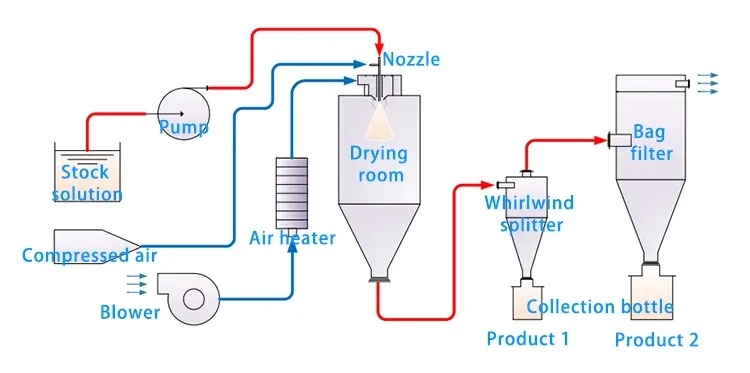
Spray drying converts a liquid feed into droplets, brings those droplets into contact with a drying gas, and removes solvent or moisture to form particles that can be collected as powder. The process can combine drying and particle formation in a single operation.
For laboratory research, a mini spray dryer offers three practical advantages.
First, it allows researchers to evaluate a formulation before committing larger quantities of expensive or difficult-to-obtain materials. This is especially relevant when an active pharmaceutical ingredient, specialty polymer, or newly synthesized material is available only in limited quantities.
Second, it enables controlled experiments. Researchers can vary feed concentration, inlet temperature, feed rate, atomization conditions, or other available operating parameters and then compare the resulting powders. The goal is to identify relationships between process conditions and product properties rather than simply obtain a dry sample.
Third, laboratory trials provide early evidence about process feasibility. Researchers can identify problems such as wall deposition, poor powder recovery, particle agglomeration, or changes in material properties before deciding whether further development is worthwhile.
A mini spray dryer does not automatically guarantee consistent particles or successful scale-up. Its main role is to provide a manageable experimental platform for developing and evaluating a spray-drying process.
Pharmaceutical Research: From Liquid Formulation to Functional Powder
-
Pharmaceutical spray drying is used for more than removing solvent from a drug solution. The process can help researchers investigate how active ingredients and excipients are distributed within particles, how a formulation behaves in the solid state, and whether a particular powder structure supports the intended use.
Developing amorphous solid dispersions
-
One important application is the development of amorphous solid dispersions (ASDs). In these formulations, a drug is dispersed in a polymer matrix in an amorphous rather than fully crystalline state.
-
For certain poorly water-soluble drug candidates, an amorphous formulation may help improve dissolution performance. However, the outcome depends on the drug, polymer, composition, and stability of the resulting solid. Spray drying is one method researchers can use to prepare and screen such formulations.
-
A mini spray dryer can support early experiments such as:
-
Comparing different drug-to-polymer ratios.
-
Investigating how feed concentration and drying conditions affect powder formation.
-
Examining whether the drug and polymer form a sufficiently uniform solid dispersion.
-
Preparing small batches for solid-state characterization and dissolution testing.
-
The resulting powder still needs to be evaluated. Techniques such as differential scanning calorimetry, X-ray diffraction, microscopy, and dissolution testing may be used, depending on the research question.
-
A visually uniform powder does not necessarily indicate that the drug is molecularly dispersed or physically stable. Spray drying is a formulation-development tool, not a substitute for analytical characterization.
Investigating drug delivery and encapsulation
-
Spray drying can also be used to investigate particle-based drug delivery systems. Researchers may combine an active ingredient with a polymer, carbohydrate, protein, or other carrier material to explore how the resulting particles behave.
-
Depending on the formulation, research objectives may include:
-
Producing powder intermediates for further formulation work.
-
Investigating the distribution of an active ingredient within a carrier matrix.
-
Exploring encapsulation of sensitive compounds.
-
Studying particle properties relevant to handling, reconstitution, or subsequent processing.
-
For example, researchers may investigate whether a carrier system helps protect a sensitive compound during processing or storage. Such protection must be demonstrated experimentally; it should not be assumed simply because the material has been spray-dried.
-
Similarly, spray drying may support the development of inhalable pharmaceutical powders, but producing an acceptable inhalation formulation requires additional control and testing of properties such as aerodynamic particle size, moisture, dispersion behavior, and dose performance. A mini spray dryer alone does not establish that a powder is suitable for clinical use.
Working with heat-sensitive pharmaceutical ingredients
-
Some pharmaceutical formulations contain proteins, peptides, enzymes, or other components that may be sensitive to temperature, interfaces, or dehydration.
-
Spray drying exposes droplets to heated gas, but the product's actual thermal history is not described by inlet temperature alone. Evaporation, outlet temperature, feed composition, and residence time all influence the conditions experienced by the material. Research on protein and vaccine formulations illustrates why process development must consider both powder production and preservation of material properties.
-
A mini spray dryer for pharmaceutical research can help researchers screen process conditions using small batches. The appropriate conditions depend on the substance and formulation, and the activity or integrity of sensitive ingredients must be checked after drying.
-
This is particularly important when comparing different feed compositions. A formulation that produces a high powder yield may not necessarily preserve the desired biological activity or solid-state characteristics.
Preparing herbal extracts and pharmaceutical intermediates
-
Laboratories may also use spray drying to convert liquid extracts or other pharmaceutical intermediates into powders for further testing and formulation. The feed may contain multiple dissolved solids, and the resulting powder characteristics can vary with the extract composition and operating conditions.
-
In these cases, researchers may need to investigate residual moisture, flowability, solubility, stability, and the recovery of the target components. Extracts containing sugars, proteins, or other sticky constituents can present challenges during drying and powder collection.
-
The suitability of a process therefore needs to be assessed using both the material's behavior during operation and the quality requirements for the collected powder.
Material Research: Engineering Particles Rather Than Just Drying Samples
-
A spray dryer for material research allows researchers to investigate how liquid feed composition, atomization, and drying conditions influence powder structure, particle morphology, and material properties. The feed may contain dissolved polymers, suspended inorganic particles, catalysts, or combinations of different components.
-
A lab scale spray dryer makes it possible to test these formulations in small batches before researchers commit to larger process trials.
Polymer and resin research
-
Polymer solutions, dispersions, and related formulations can be studied to understand how drying conditions affect particle formation and powder handling.
-
Researchers may investigate:
-
Whether the feed produces discrete particles or agglomerates.
-
How polymer concentration influences particle morphology.
-
Whether the resulting powder can be collected and handled consistently.
-
How drying conditions affect the properties required for subsequent processing.
-
The behavior depends strongly on the polymer and solvent system. Some feeds form particles readily, while others may produce sticky deposits, hollow structures, irregular particles, or agglomerates.
-
For this reason, the objective is not necessarily to obtain the driest possible product. It is to determine whether the chosen formulation and process can produce a powder with the required properties.
Ceramic powders and inorganic materials
-
Spray drying can also be used to process suspensions containing ceramic or other inorganic particles. As the liquid droplets dry, suspended solids become concentrated and form powder particles.
-
Depending on feed composition and operating conditions, the collected material may consist of individual particles, aggregates, or larger agglomerated structures. Researchers may investigate powder morphology, composition, flowability, and suitability for downstream processes.
-
This work can be relevant when preparing powders for subsequent shaping, compaction, coating, or thermal treatment. However, spray drying does not by itself establish the final density, strength, or performance of a ceramic component. Those properties depend on the complete material formulation and subsequent processing steps.
-
For ceramic suspensions, feed stability is particularly relevant. Sedimentation, uneven solids distribution, or changes in viscosity during an experiment may affect the consistency of the feed entering the nozzle. These variables should be controlled when comparing experimental results.
Catalyst and functional-material development
-
Catalysts and other functional materials may contain multiple components that need to be combined in a controlled way. Spray drying offers a route to transform a liquid mixture or suspension into a powder for further characterization.
-
Researchers may use the process to investigate:
-
How the composition of the feed affects the collected powder.
-
Whether different components remain distributed as intended.
-
How particle morphology changes under different drying conditions.
-
Whether the resulting powder is suitable for later activation, coating, or reaction testing.
-
For a catalyst formulation, for example, the powder's appearance alone cannot confirm catalytic activity. Chemical composition, surface properties, porosity, and performance in the intended reaction may all require separate analysis.
-
The same principle applies to other functional materials: spray drying creates a powder form, while characterization determines whether the material meets its research objectives.
Encapsulation and composite particles
-
Another application is the preparation of particles containing more than one material. A liquid feed can combine a functional ingredient with a carrier or matrix material, allowing researchers to explore composite particle formation.
-
This may be relevant to polymer–inorganic composites, encapsulated ingredients, or functional powders designed for subsequent processing.
-
The final structure depends on factors such as component compatibility, feed stability, droplet formation, and solvent removal. Different formulations may produce a matrix structure, surface-enriched components, or separate phases. These outcomes must be investigated rather than assumed from the drying method.
What Can Researchers Learn from a Spray-Drying Trial?
-
A useful laboratory trial should answer a defined research question. Simply collecting a powder is not enough to establish whether the process is suitable.
-
The following framework can help researchers connect their experimental conditions to the results they need to measure.
|
Research question
|
Variables worth investigating
|
Possible evaluation methods
|
|
Can the formulation be spray-dried?
|
Feed concentration, viscosity, atomization, feed rate
|
Stable operation, powder recovery, visible deposits
|
|
What affects particle morphology?
|
Feed composition, drying conditions, atomization settings
|
Microscopy, particle-size analysis
|
|
Is the powder suitable for further formulation?
|
Moisture, composition, collection conditions
|
Moisture analysis, flowability, solubility or dissolution testing
|
|
Does the process preserve sensitive ingredients?
|
Thermal conditions, feed composition, residence conditions
|
Activity, integrity, or stability testing appropriate to the material
|
|
Is the process worth scaling up?
|
Operating window, yield, reproducibility, material consumption
|
Repeat trials and comparison of powder properties
|
-
The appropriate test methods depend on the research objective. Not every experiment needs every analysis listed above.
-
A practical approach is to identify the most important product attribute before running the first trial. For a pharmaceutical formulation, that may be solid-state behavior or dissolution. For a ceramic suspension, it may be particle morphology and downstream processability. For a polymer powder, it may be recovery, flowability, or compatibility with subsequent processing.
-
This makes it easier to distinguish a genuinely useful result from a trial that merely produced a dry sample.
Key Process Challenges in Pharmaceutical and Materials Applications
-
A laboratory mini spray dryer can be used for different pharmaceutical and materials research projects, but the processing challenges depend on the feed composition, solvent system, and properties required in the final powder. Understanding these differences helps researchers plan meaningful experiments.
-
Powder yield and wall deposition
-
Some materials adhere to the drying chamber or other internal surfaces rather than reaching the collection vessel. This can reduce the recovered quantity and complicate comparisons between trials.
-
Sticky behavior may be associated with the material's composition, residual moisture, glass-transition behavior, or drying conditions. Increasing the inlet temperature is not always the right response. Researchers should consider feed properties and the relationship between drying conditions and the powder's physical state.
Particle size and morphology
-
Particle characteristics depend on both the feed and the drying process. Atomization influences droplet formation, while solids concentration and drying behavior influence the particles formed from those droplets.
-
The relationship is not always simple: a change in one operating variable may affect several powder properties at the same time. Researchers should therefore change parameters systematically and measure the results rather than assume that a particular setting will produce a particular particle size.
Heat sensitivity and material stability
-
A formulation may tolerate a short exposure to drying conditions differently from prolonged heating. In addition, the active component may be affected by dehydration, oxidation, solvent interactions, or other aspects of the process.
-
The relevant acceptance criteria should be defined before the experiment. For pharmaceutical or biological materials, this may include chemical integrity, activity, residual solvent, or physical stability. For inorganic or polymeric materials, it may include composition, morphology, or properties needed for downstream processing.
Solvent compatibility and safety
-
Some formulations use organic solvents rather than water. These systems require careful consideration of solvent properties, vapor handling, ventilation, and the equipment's intended operating configuration.
-
A standard laboratory spray dryer should not be assumed to be suitable for every flammable or hazardous solvent. Researchers must verify the specific equipment configuration, applicable safety controls, and solvent compatibility before processing such feeds.
-
Where a closed-loop or explosion-protected system is required, that requirement should be established before selecting or operating the equipment. A product description or the term “mini spray dryer” alone does not confirm suitability for a particular solvent system.
How Mini Spray Drying Supports Scale-Up Decisions
-
A mini spray dryer is most useful when its results are treated as evidence for the next stage of development, rather than as a guarantee of industrial performance.
-
Laboratory experiments can help identify a promising formulation, establish an initial operating window, and reveal problems that may need to be solved before larger-scale trials. Published pharmaceutical research has used miniaturized or laboratory spray-drying equipment to evaluate formulations and compare powder characteristics during early development.
-
However, moving from a mini spray dryer to a larger system involves more than increasing the feed rate. Larger equipment may differ in droplet formation, airflow distribution, heat and mass transfer, residence time, collection efficiency, and solvent-handling requirements.
-
For this reason, researchers should record the conditions that produced a successful result, including feed composition, concentration, feed rate, inlet and outlet temperatures, atomization settings, and collection observations where applicable. The measurements needed will vary with the equipment and research objective.
-
The aim is to understand the process sufficiently to decide which conditions need to be preserved, adjusted, or investigated further during scale-up.
Matching the Mini Spray Dryer to the Research Objective
-
Choosing the right lab mini spray dryer depends on the material being processed, the required powder properties, and the objectives of the research.
-
For pharmaceutical formulation development, the priority may be solid-state properties, dissolution behavior, or the stability of the active ingredient. Researchers should define the required powder characteristics and analytical methods before selecting the drying conditions.
-
For proteins, peptides, and other heat-sensitive materials, preserving biological activity or material integrity is a central concern. The feed composition, drying conditions, and equipment configuration should be evaluated together, with the resulting powder tested to determine whether the desired properties have been maintained.
-
For polymer and resin research, feed viscosity, solvent compatibility, particle formation, powder recovery, and handling behavior may be particularly relevant. These factors help determine whether the resulting powder is suitable for subsequent formulation or processing.
-
For ceramic suspensions, researchers should pay close attention to suspension stability, solids content, and particle morphology. An uneven feed or changes in suspension properties during processing can affect the consistency of experimental results.
-
For catalysts and other functional materials, the key question is whether spray drying preserves the composition and properties needed for subsequent activation or performance testing. Powder appearance alone cannot confirm catalytic activity or functional performance.
-
Finally, when working with organic-solvent formulations, researchers must confirm solvent compatibility, vapor handling, and the safety features required for the specific application. A standard laboratory spray dryer should not be assumed to be suitable for every solvent system.
-
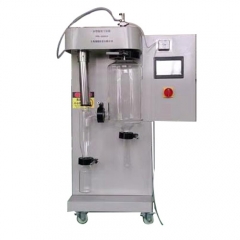
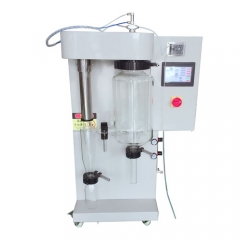
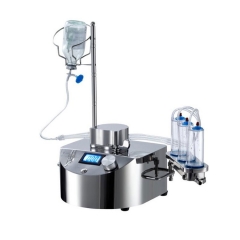
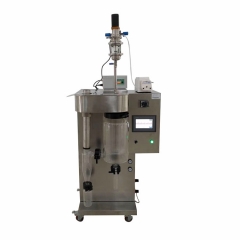
For Ollital, the Lab Scale 1.5L Mini Spray Dryer Machine is described for laboratory research involving pharmaceutical, biological, chemical, and materials applications, including solutions, emulsions, and suspensions. The Small Scale Experimental Spray Dryer for Laboratories is another option listed for small-volume research work.
-
These product descriptions provide a starting point. Before selecting a model, researchers should confirm that its actual configuration matches their feed properties, solvent system, sample volume, safety requirements, and research objectives.
Conclusion: Use Small-Scale Trials to Answer Specific Research Questions
-
Mini spray drying is valuable in pharmaceutical and materials research because it allows researchers to investigate powder formation before committing to larger quantities of material or more extensive process development.
-
In pharmaceutical work, it can support formulation screening, amorphous solid dispersion development, encapsulation studies, and the preparation of powder intermediates. In materials science, it can help researchers examine polymer powders, ceramic suspensions, catalyst formulations, and composite particles.
-
The key is to connect each trial to a measurable research objective. Powder recovery, particle morphology, solid-state properties, stability, and downstream processability may all matter, but their relative importance depends on the material and its intended use.
-
A mini spray dryer for pharmaceutical and material research should therefore be evaluated not simply by whether it produces powder, but by whether it allows researchers to investigate the properties that determine the next stage of development.
FAQ
What is a mini spray dryer used for in pharmaceutical research?
-
It is used to investigate small-batch powder formulations, including drug–polymer dispersions, encapsulation systems, and pharmaceutical intermediates. The resulting powders require appropriate characterization to confirm their properties.
Can a mini spray dryer be used for heat-sensitive materials?
-
Yes, it may be used to investigate heat-sensitive formulations. However, suitability depends on the material, its exposure to processing conditions, the formulation, and the equipment configuration. Stability or biological activity should be evaluated after drying.
What materials can be processed with a laboratory mini spray dryer?
-
Depending on the equipment and configuration, research feeds may include solutions, emulsions, suspensions, polymer formulations, ceramic suspensions, and selected pharmaceutical or biological materials.
Can laboratory spray-drying results be transferred directly to industrial production?
-
Not automatically. Laboratory trials provide useful process-development data, but differences in airflow, atomization, heat transfer, residence time, and powder collection may require further optimization at larger scales.
What should researchers evaluate after spray drying?
-
The evaluation should match the research objective. Possible measurements include particle size and morphology, powder recovery, residual moisture or solvent, solid-state properties, dissolution behavior, material stability, and downstream processability.





 Servicio en línea
 +86 15960821529
 kevin@ollital.com
 +86 15960821529
 +8615960821529


