
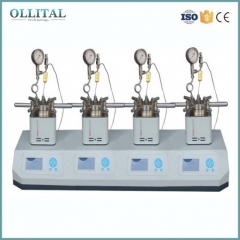
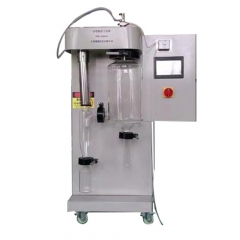
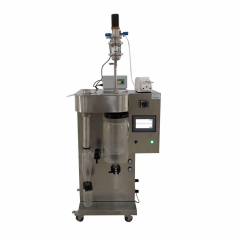
High quality 1.5L scale lab spray dryer equipment
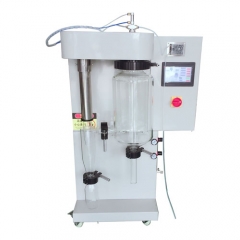
Lab scale spray dryer is suitable for the production of in universities, research institutes and food and pharmaceutical chemical enterprises.
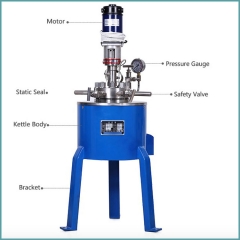
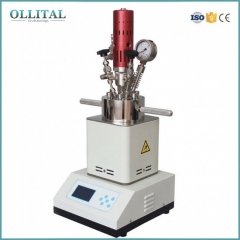
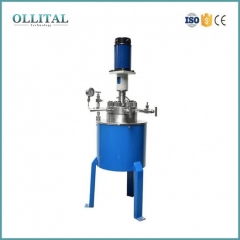
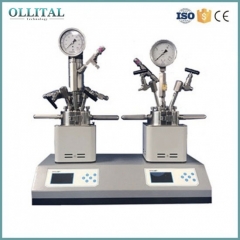
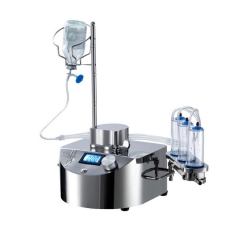
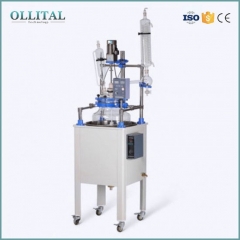
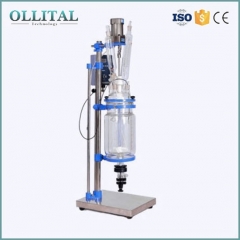
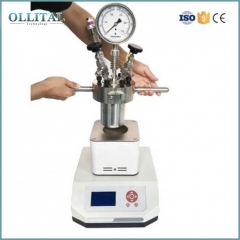
In numerous fields such as the chemical industry, biotechnology, and food processing, there exists a piece of equipment akin to the alchemist's cauldron of modern times, transforming raw materials into valuable products—the reactor vessel. As a vital experimental apparatus for reactions across many biochemical domains, today we shall explore this seemingly ordinary yet remarkably powerful core industrial equipment.
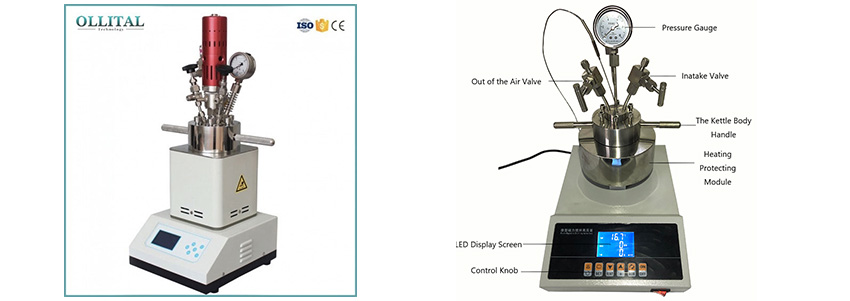
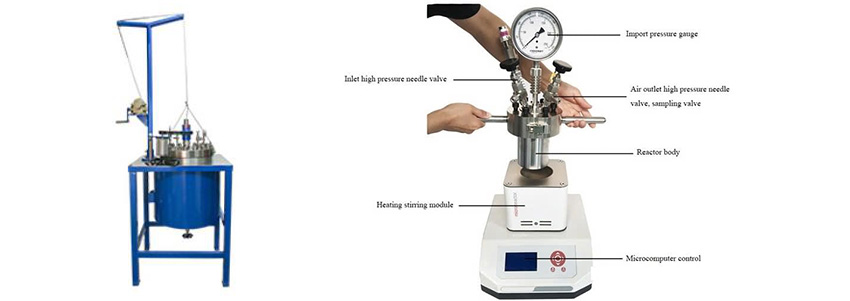
A reactor is a sealed container used for conducting chemical reactions, typically constructed from high-strength materials capable of withstanding extreme conditions such as high temperatures and pressures. It functions much like a pressure cooker in the kitchen, yet is far more sophisticated and intricate, enabling precise control over reaction conditions to ensure chemical processes proceed under optimal circumstances. Reaction vessels must not only be constructed from high-strength, corrosion-resistant materials such as specialised stainless steel, alloys, composite materials, or internally lined with enamel to withstand thermal .stresses, chemical corrosion, and internal pressures from the reaction medium. Crucially, they integrate precise sensing, drive, and control systems, transforming them into intelligent reactors with the capacity for perception and calculation.
Reactor come in various types: by operating mode, they may be classified as batch, continuous, or semi-batch reactors. By structure, they may be categorised as jacketed reactors, coil-heated reactors, or high-pressure reactors. Reactor comprises a vessel body and a stirring system—magnetic or mechanical—ensuring uniform mixing of reactants and enhancing reaction efficiency. The heat transfer system precisely controls reaction temperature by heating or cooling the material. The sealing system prevents material leakage, ensuring safe production. The instrumentation control system meticulously monitors and regulates critical parameters such as temperature, pressure, and pH. Safety devices, comprising bursting discs and safety valves, safeguard operational safety.
As the core equipment of modern process industries, technological advancements in reactors have directly propelled innovation across chemistry, biotechnology, materials science and related fields. From laboratory-scale vessels to industrial-scale reactors, these apparatus are transforming raw materials into diverse products that enhance our lives through increasingly intelligent, secure and efficient processes. With the continuous emergence of novel materials and techniques, reactor technology will continue to evolve, playing a vital role in green manufacturing and sustainable development.



 Servicio en línea
 +86 15960821529
 kevin@ollital.comkevinollital@gmail.com
 +86 15960821529
 +8615960821529


