
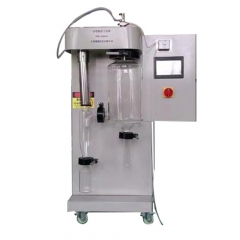
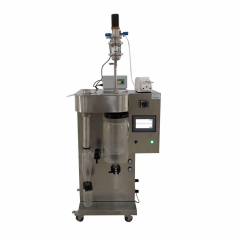
High quality 1.5L scale lab spray dryer equipment
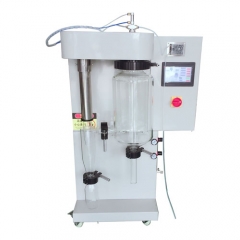
Lab scale spray dryer is suitable for the production of in universities, research institutes and food and pharmaceutical chemical enterprises.
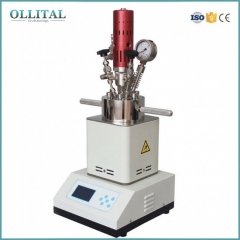
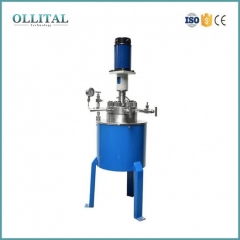
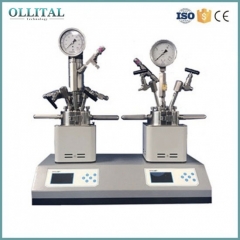
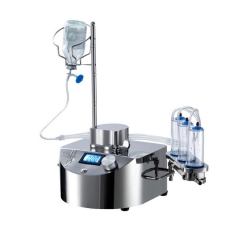
An ultrasonic homogenizer is a versatile laboratory instrument used to disrupt cells,break down particles,emulsify liquids,and improve the uniformity of suspensions. It is widely used in biotechnology,pharmaceutical research,food processing,chemical research,and material science. Whether the goal is to release intracellular components,prepare a stable emulsion,or disperse fine particles,ultrasonic energy provides an efficient way to process samples without relying on mechanical blades.
Ultrasonic homogenization works by converting electrical energy into high-frequency mechanical vibrations. When these vibrations are transferred into a liquid through an ultrasonic probe,they create powerful physical effects that can rapidly change the structure of cells,droplets,and suspended particles.
Electrical Energy → Ultrasonic Vibration → Cavitation Bubbles → Bubble Collapse → Cell / Particle Disruption
Cavitation:Microscopic bubbles form and rapidly collapse inside the liquid.
Shear Force:Intense local fluid movement helps break apart cells,droplets,and particles.
Microstreaming:High-speed liquid movement improves mixing and dispersion.
Shock Waves:The collapse of cavitation bubbles generates localized high-energy pressure waves.
These combined effects allow ultrasonic energy to act directly on the sample within a very short period of time.The core principle behind an Ultrasonic Homogenizer Machine is ultrasonic cavitation. An ultrasonic transducer converts electrical energy into mechanical vibration,which is transmitted through the probe into the sample. During the alternating high- and low-pressure cycles,microscopic bubbles can form in the liquid. When these bubbles collapse,they generate localized shear forces,turbulence,microjets,and shock waves. These forces can disrupt cell membranes,reduce particle agglomeration,and break larger droplets into smaller ones.
Because the ultrasonic energy is concentrated around the probe tip,a Laboratory Ultrasonic Homogenizer can provide strong processing intensity even when working with relatively small sample volumes. The process can be adjusted by controlling parameters such as amplitude,processing time,pulse mode,and probe size. For temperature-sensitive samples,pulse operation can also help limit heat generation during processing.
Cells:Bacteria,yeast,plant and animal cells can be disrupted to release intracellular components.
Proteins & Enzymes:Ultrasonic processing can assist extraction and sample preparation.
Emulsions:High-intensity ultrasonic energy helps reduce droplet size and improve dispersion.
Nanoparticles:Agglomerated particles can be dispersed more uniformly in liquid media.
DNA / RNA:Ultrasonic treatment can be used in specific laboratory sample preparation processes.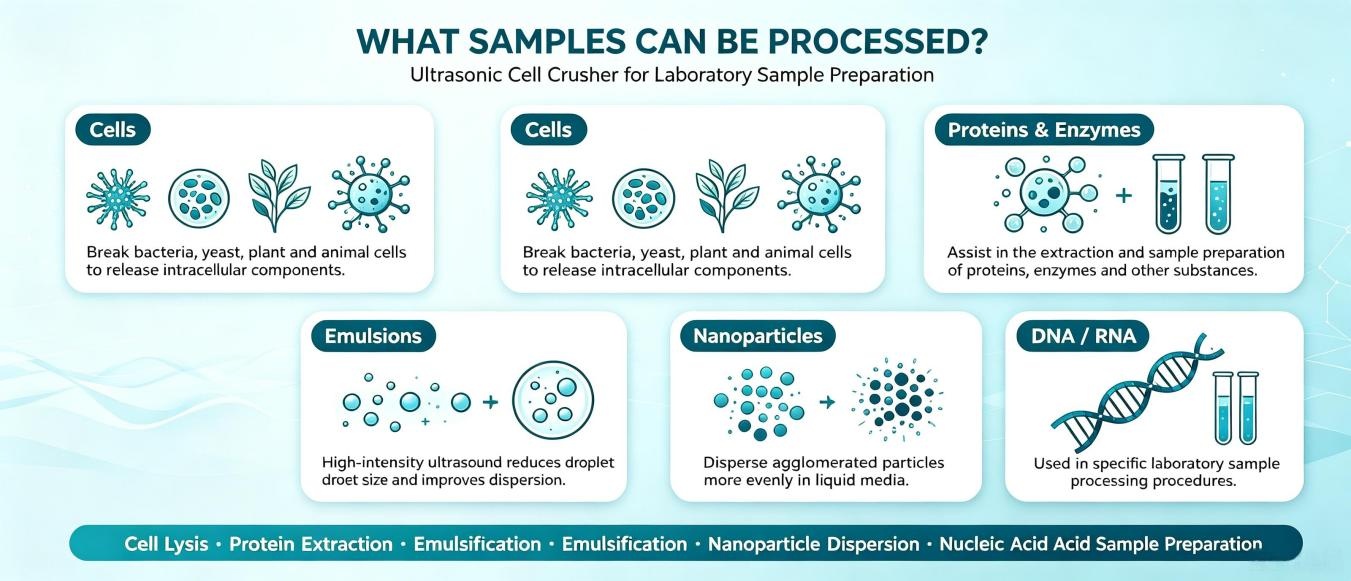
✓ High-intensity ultrasonic processing✓ Fast and efficient sample disruption✓ Adjustable amplitude and processing time✓ Pulse mode for improved temperature control✓ Suitable for a wide range of laboratory applications✓ Different probes for different sample volumes
An Ultrasonic Homogenizer offers researchers a flexible method for cell disruption,emulsification,dispersion,and sample preparation. Unlike conventional mechanical homogenization,the process does not depend on rotating blades inside the sample. Instead,ultrasonic energy creates cavitation directly within the liquid,producing intense localized forces where they are needed.
For laboratory applications,selecting the appropriate probe size,ultrasonic power,amplitude,processing time,and pulse mode is important. The optimum conditions depend on the sample volume,material characteristics,concentration,and desired processing result. For heat-sensitive biological materials,temperature monitoring and appropriate pulse settings are particularly important.
From routine laboratory sample preparation to biotechnology and pharmaceutical research,ultrasonic homogenization provides a practical and controllable approach to processing liquid samples. By matching the ultrasonic parameters to the material,researchers can achieve more consistent disruption,dispersion,and homogenization results.



 Servicio en línea
 +86 15960821529
 kevin@ollital.comkevinollital@gmail.com
 +86 15960821529
 +8615960821529


