
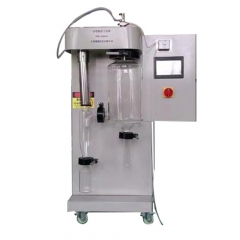
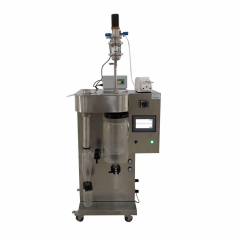
High quality 1.5L scale lab spray dryer equipment
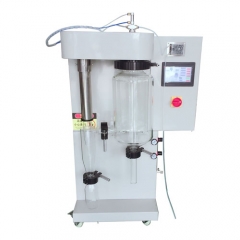
Lab scale spray dryer is suitable for the production of in universities, research institutes and food and pharmaceutical chemical enterprises.
When sourcing small‑scale injection molding equipment for lab R&D, prototype testing or low‑volume production, buyers consistently raise three core questions: What tonnage do I need? How many cavities can my mold support? Should I go with an all‑electric model? These questions do not stand alone. Underneath them all lies one practical concern: whether your mold and machine are well‑matched to deliver stable, repeatable molding results.
A widespread mistake is treating tonnage as the primary selection benchmark. In practice, your mold sets the requirements for your machine. Tonnage, cavity quantity, mold footprint and drive type are outputs derived from your mold and part specifications — not your starting‑point criteria.
The "tonnage" of an injection molding machine refers to clamping force, not the machine’s physical weight. During injection and packing phases, clamping force holds the two mold halves closed to counteract cavity pressure that tries to pry the mold open. Insufficient clamping force causes flash along the parting line, inconsistent part dimensions and potential mold damage. On the other hand, over‑specifying clamping force brings real downsides: higher equipment cost, larger floor‑space footprint and greater energy consumption. Excess clamp load can also apply uneven pressure to small molds and accelerate tool wear.
The industry formula to estimate required clamping force is: Clamping force (ton) ≈ Projected area of parts plus runners on the parting plane (cm²) × Cavity pressure (kg/cm²) ÷ 1000. Cavity pressure depends on material, wall thickness, flow length, and gate design. Thin‑wall and precision parts require higher cavity pressure. A safety factor is typically applied in actual selection.
This explains the tonnage range of the OLT‑XPM series: OLT‑XPM‑12Pro / 12Plus is 12T, and OLT‑XPM‑17 / 17Plus is 17T. These figures are not arbitrary marketing specs. They are sized for typical projected‑area and cavity‑pressure conditions seen with miniature precision components and R&D sample runs. Small injection molding machine tonnage selection is not about choosing the largest machine. It is about matching clamping force to the mold's projected area and the material's cavity pressure requirements. The machine must hold the mold closed securely, but not be so oversized that it wastes capacity or damages small molds.
The number of cavities in a mold directly defines how many finished parts you produce in each molding cycle. When buyers ask about cavity numbers, they are essentially calculating achievable production throughput is: Daily output ≈ Cycles per hour × Cavity count × Effective production time × Yield rate. For example, with a 30‑second cycle time, 120 cycles per hour, and a 4‑cavity mold, output is 480 parts per hour. At 95% yield and 20 hours per day, that is about 9,100 parts. If monthly demand is 200,000 parts, a 4‑cavity setup may not be enough—you would need more cavities, a shorter cycle, or operating multiple small machines in parallel.
Even so, increasing cavity count comes with hard practical constraints:
‑ More cavities increase total projected parting‑line area, raising required clamping force. A part that runs adequately at 12 tons in a 1‑cavity mold may demand considerably higher tonnage once expanded to 4 cavities.
‑ A multi‑cavity mold requires more molten material per shot. If machine shot capacity is too low, you will encounter short shots and incomplete part filling.
‑ Multi‑cavity molds occupy larger physical dimensions, requiring larger tie‑bar clearance and extended allowable mold height.
The OLT‑XPM‑12 series offers 130×130mm tie bar spacing and 100–180mm mold height, suitable for 1‑cavity to 2‑ or 4‑cavity small molds. The OLT‑XPM‑17 series offers 200×200mm tie‑bar opening and 150‑235mm mold‑height range, accommodating somewhat larger multi‑cavity tooling.
The biggest challenge with multi‑cavity molds is uniform filling across all cavities. If filling is unbalanced, dimensions and weights will vary, and yield will drop. The more cavities, the higher the demands on runner design and mold manufacturing precision. For R&D and precision parts, low cavity counts (1 or 2) often provide more stable data. Multi‑cavity molds are better suited to production stages where process parameters have already been fully validated. For products like injection molding machine for plastic caps, cavity counts are typically higher, but only if machine tonnage, shot capacity, and mold dimensions are all properly matched. Therefore, cavity count selection for a plastic injection machine is a balance of output, cost, precision, and equipment capability — it is never a simple “more‑is‑better” decision.
Proper mold‑machine matching is about more than simply mounting the mold onto the platen; it is about achieving stable running conditions. Tie‑bar spacing and allowable mold height set non‑negotiable physical limits. If the mold envelope does not match a horizontal injection molding machine, even a well‑made mold cannot run properly on that machine.
Once the mold is mounted, what really affects part quality is mold temperature and cooling. Mold temperature directly influences crystallization, shrinkage, internal stress, and surface quality. If mold temperature is unstable, dimensional variation between batches increases, and warpage or deformation may occur. If cooling channel layout is unreasonable, uneven cooling will lengthen the cycle time as well.
Here is a common misunderstanding worth clarifying: an all‑electric machine does not require cooling water for the machine itself, because there is no hydraulic oil to cool. However, mold cooling and machine cooling are two different things. Regardless of machine type, the mold typically still requires a mold temperature controller or cooling channels to control mold temperature, shorten cycle time, and stabilize dimensions. Therefore, when selecting a plastic injection molding machine, confirm whether the machine has reserved mold cooling interfaces and whether it is convenient to connect an external mold temperature controller. The fact that the machine needs no cooling water does not mean your mold can run without active thermal management.
Hydraulic injection molding machines transfer force via oil pumps, cylinders and control valves. Their power‑transmission path is longer, response speed is relatively slow, and positioning accuracy drifts as oil temperature and system pressure fluctuate. Rising oil temperature erodes process repeatability — a critical drawback when you manufacture tiny precision parts.
Hydraulic hardware also consumes hydraulic oil, needs dedicated cooling‑water supply and carries fluid‑leak risks, pushing up long‑term maintenance expenses. For laboratories, clean‑room environments, medical or electronic‑component production, oil contamination and thermal drift create extra operational headaches.
All‑electric injection molding machines use servo motors for direct drive, achieving higher positioning accuracy and better repeatability. An all‑electric small machine such as the OLT‑XPM series can reach ±0.03mm positioning accuracy, making it suitable for precision small parts and small‑batch consistency. It runs on 220V single‑phase power, requires no industrial three‑phase supply, and consumes less energy. With no hydraulic oil and no cooling water, the machine itself does not need a cooling water connection, and maintenance costs are lower. For small injection molding machines focused on R&D and precision output, allelectric drive is not a luxury premium addon. It is a fundamental requirement to guarantee repeatable results.
The correct sequence for selecting a small injection molding machine is: product first, mold second, machine last.
In practical steps:
1. Define material grade and precision specifications for your target part.
2. Confirm cavity quantity, projected part‑plus‑runner area, mold outer dimensions and cooling‑channel layout.
3. Calculate required clamping force and validate sufficient machine shot capacity.
4. Select machine tonnage, tie‑bar spacing, temperature‑control options and drive type accordingly.
This also explains why selection for a horizontal injection molding machine or a plastic injection machine cannot rely on tonnage alone. Tonnage is a result, not a starting point—the mold comes first. Cavity count is a balance of output, cost, precision, and equipment capability. Mold dimensions determine whether the machine can physically fit the mold. Drive type determines how stably the machine runs. High‑cavity layouts are common for high‑volume items such as plastic caps, a higher cavity count can work—but only if machine tonnage, shot capacity, and mold dimensions are properly matched. For precision parts in R&D, a lower cavity count and all‑electric drive are often more stable. Selection is not about choosing the largest machine; it is about choosing the most suitable one.
Choosing a small injection molding machine means aligning tonnage, cavity configuration and mold dimensions. If you have questions on your upcoming project, feel free to get in touch — our team is ready to help you find your optimal match.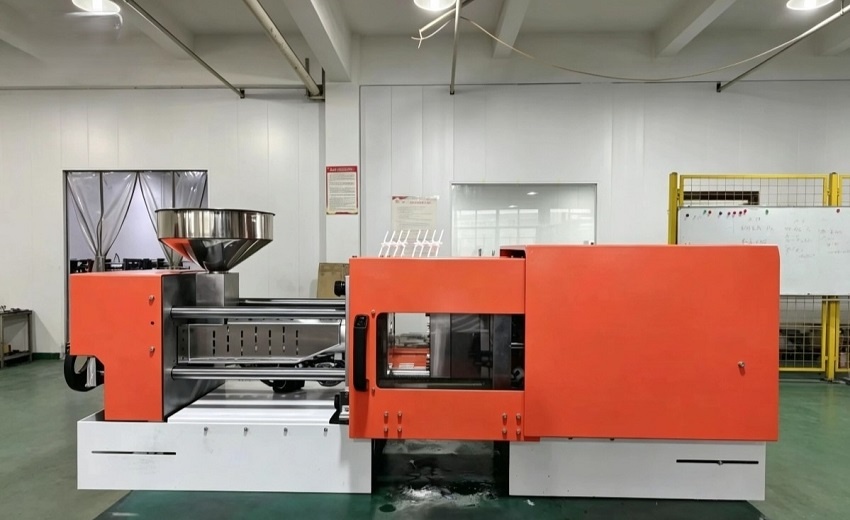



 Servicio en línea
 +86 15960821529
 kevin@ollital.comkevinollital@gmail.com
 +86 15960821529
 +8615960821529


