

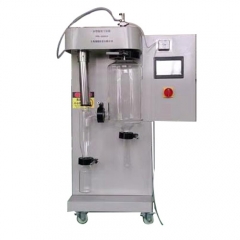
High quality 1.5L scale lab spray dryer equipment
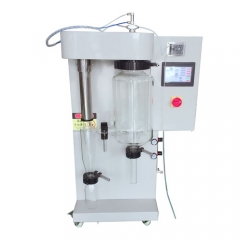
Lab scale spray dryer is suitable for the production of in universities, research institutes and food and pharmaceutical chemical enterprises.
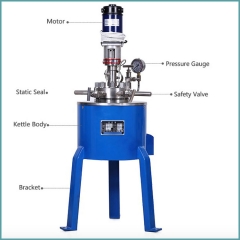




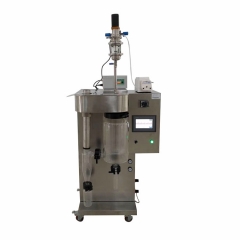



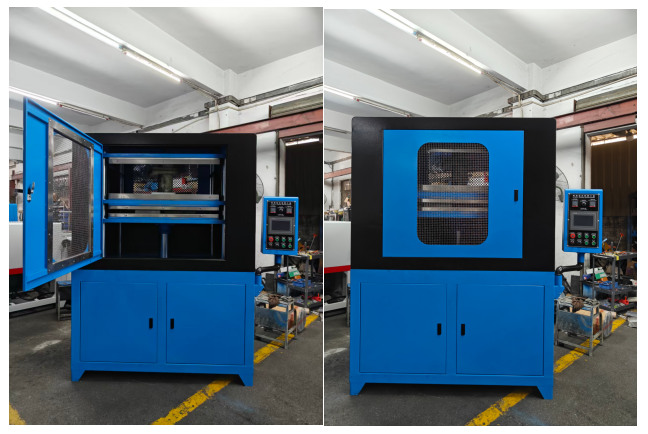
A laboratory flat vulcanizing press works by applying controlled heat and pressure to rubber or silicone compounds for a specified period of time. Through this process, uncured rubber undergoes vulcanization, forming a more stable structure with improved elasticity and mechanical properties.
The machine combines a hydraulic system, heated platens, and temperature and time controls to complete the molding and curing process.
First, the uncured rubber compound is placed inside the mold, which is positioned between the upper and lower heating platens.
When the machine starts the pressing process, the hydraulic system drives the piston upward, moving the platform and closing the platens around the mold.
Hydraulic pressure is then applied to compress the material inside the mold cavity, helping it fill the required shape and maintain close contact with the mold surfaces.
The heating platens transfer heat to the mold and the rubber compound.
The temperature is controlled through the machine's heating system. As the material reaches the required curing temperature, the vulcanization reaction begins and progresses.
Uniform heat transfer is important because temperature differences within the material may affect the consistency of the curing process.
3. Vulcanization and Cross-Linking
Vulcanization is a chemical process in which polymer chains form cross-links with one another through a suitable curing system.
Before vulcanization, rubber molecules can move and slide relatively easily. During curing, cross-links gradually form a three-dimensional network structure.
This changes the material's properties, helping it become more elastic, structurally stable, and resistant to permanent deformation.
The degree of vulcanization depends on the rubber formulation, curing temperature, pressure conditions, and processing time.
During vulcanization, the machine maintains the required temperature and pressure for a preset period.
Temperature influences the speed of the curing reaction.
Pressure helps the material fill the mold cavity and maintain its shape during processing.
Curing time determines how long the material remains under the specified conditions.
These three factors work together to influence the final molding quality. Insufficient curing may result in incomplete cross-linking, while excessive curing may negatively affect material properties, depending on the formulation.
When the preset curing cycle is completed, the hydraulic system releases the pressure and the moving platform returns, separating the heating platens.
The mold can then be opened and the vulcanized material removed.
At this stage, the rubber compound has completed the transformation from an uncured material into a cured, molded structure.
The working principle of a laboratory flat vulcanization machine is based on the combination of hydraulic pressure, heat transfer, and controlled curing time.
By closing the mold, applying pressure, transferring heat, and maintaining suitable curing conditions, the machine facilitates the cross-linking reaction that transforms uncured rubber into a stable molded material.
Understanding the relationship between temperature, pressure, and curing time is essential for controlling the vulcanization process and achieving consistent results.



 Servicio en línea
 +86 15960821529
 kevin@ollital.comkevinollital@gmail.com
 +86 15960821529
 +8615960821529


